
The investigation
Looking again at Hilbre’s buried past
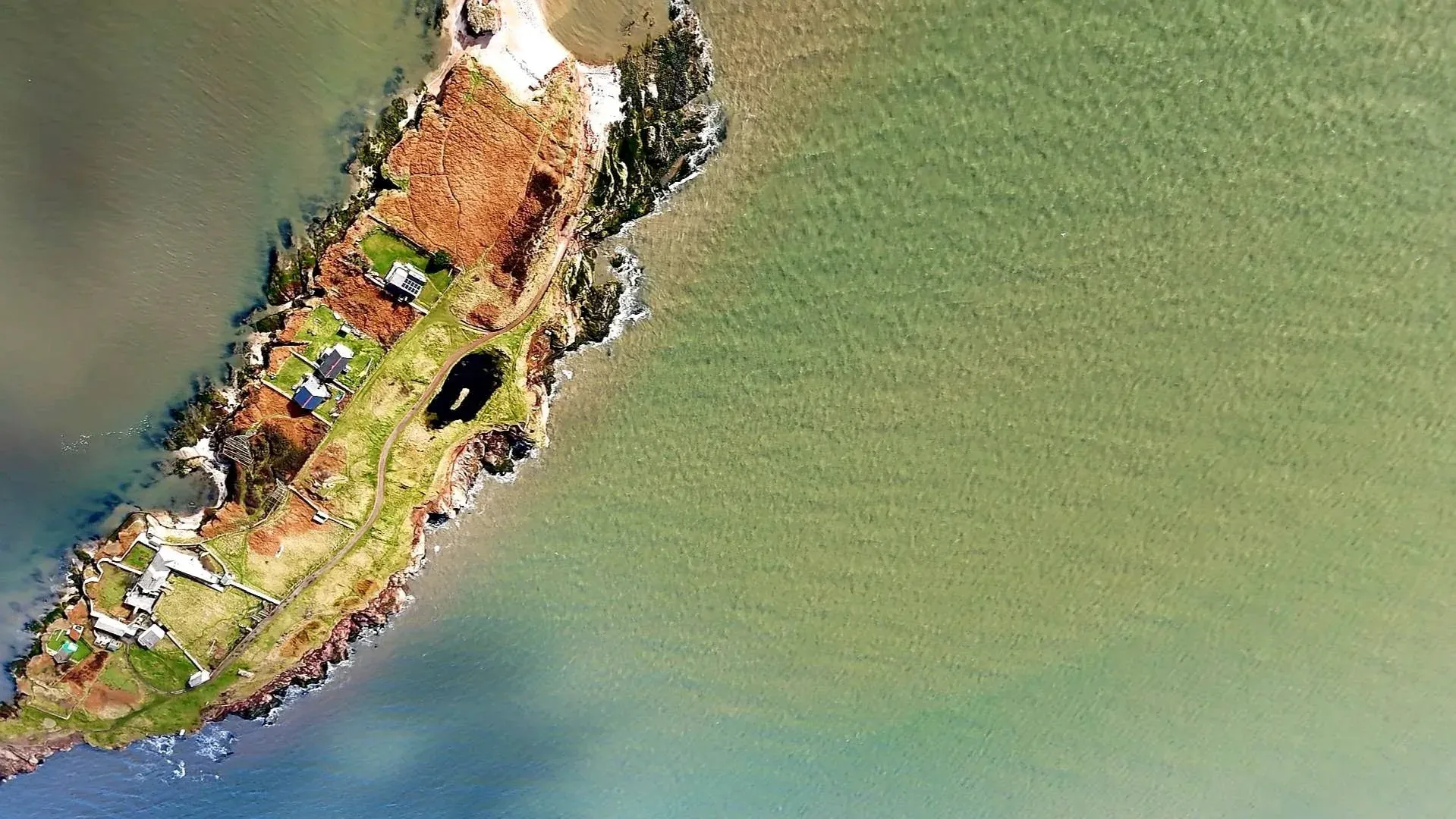
In July and August 2016, an archaeological project beside the Bird Observatory returned to a site first explored ten years earlier.
The fieldwork record distinguishes securely observed layers and artefacts from tentative interpretation, including the possible threshold and the building’s wide date range.
Why return?
Evidence from the 2006 excavation
The earlier project had revealed rock-cut postholes outlining a rectangular structure. Prehistoric pottery and medieval tile were also recovered, showing that people had used Hilbre across widely separated periods.
A possible early-medieval date—initially described as approximately AD 400–1100—made the structure especially interesting because dwellings from that period are rare in north-west England. However, the 2006 posthole fills produced no charred material for radiocarbon dating, so the proposal remained a working hypothesis.
Fieldwork diary
Four stages of the 2016 dig
The surviving updates record how the investigation developed as soil was removed and the trenches approached bedrock.
-
Preparing to return to the site
Rob Philpott and Christine Longworth organised the investigation with Friends of Hilbre. The team returned to ground beside the Bird Observatory where a 2006 project had revealed postholes belonging to a rectangular structure.
-
Two trenches opened
Trenches II and III were opened at opposite ends of the earlier excavation. The northern trench contained deep sandy soil and mixed finds, while work in the shallower southern trench reached trowelling more quickly.
-
Reading the layers
The northern trench showed evidence of relatively recent disturbance. Below mixed soil lay wind-blown sand and then compact former topsoil containing material from the 16th to 19th centuries. Stones in this layer raised the possibility of packed postholes.
-
A possible threshold emerges
With both trenches largely excavated to weathered bedrock, a carefully selected concentration of beach cobbles was found along the projected posthole line. The working interpretation was a reinforced area of heavy wear—possibly the building’s threshold.
The finds
Fragments from different periods
The trenches contained objects and materials spanning prehistory to the modern era. Their mixed context was as important as the individual finds.
Heat-shattered stone
Found in both trenches. Two pieces from the southern trench fitted together, suggesting that a stone had been heated and broken on the site.
Flint
Recovered from the southern trench alongside heat-shattered stones, adding to evidence of much earlier activity on Hilbre.
Stoneware tankard
A partial base, probably dating to the late 17th century, retained enough of a decorative crest to offer the prospect of identifying its origin or maker.
Pottery handle
A small late-medieval or early post-medieval handle preserved part of the potter’s fingerprint on its unglazed underside.
Multi-handled tyg
Part of the base of a drinking cup, probably dating to the late 16th or early 17th century and possibly made locally in Buckley.
Cistercian ware rims
Two finely made cup rims were found in former topsoil with coal and window glass, within a layer containing material dating from the 16th to 19th centuries.
Heavy chain link
The largest object recovered. Its location led the team to consider a likely maritime connection, although the diary did not offer a final identification.
Beach cobbles
Deliberately placed stone clusters may have packed upright posts, while a larger spread on the posthole line was interpreted as a possible threshold.
Reading the ground
Context changes what a find can tell us
A disturbed northern trench
Prehistoric heat-shattered stone appeared alongside 18th-century pottery and modern debris in the upper layer. Spade marks lower down suggested relatively recent gardening, while older material above younger layers indicated that soil had probably been moved from elsewhere on the island.
A quieter southern sequence
The southern trench held less modern material and reached archaeological surfaces sooner. Flint, refitting heat-shattered stones and pottery fragments made it useful for examining earlier activity, although those finds did not by themselves date the post-built structure.
Postholes and a possible threshold
Two probable postholes were identified in each trench. A spread of selected beach cobbles lay on the projected posthole line and may have consolidated a heavily trampled entrance, but this remained an archaeological interpretation rather than a definitive identification.
Salt-working test pits
Separate test pits in the north of Hilbre investigated remains associated with the island’s late-17th to mid-18th-century salt-processing works, extending the project beyond the possible building site.
What remained unresolved
An important possibility—not a settled date
By August, the diary described the best estimate for the building as AD 400–1200. No independently datable object had yet tied the structure to that range, and the hoped-for radiocarbon evidence had not been recovered in 2006. The 2016 record therefore supports a possible early-medieval interpretation while leaving the building’s date open.
People and fieldwork
A collaborative fieldwork record
The excavation diary thanks the volunteers who helped during the opening stages: Peter, Marianne, Tom, Sarah A., Sarah B., Bill, Ann, Andy and Mark. Their work helped record the trenches, finds and questions that remain open.